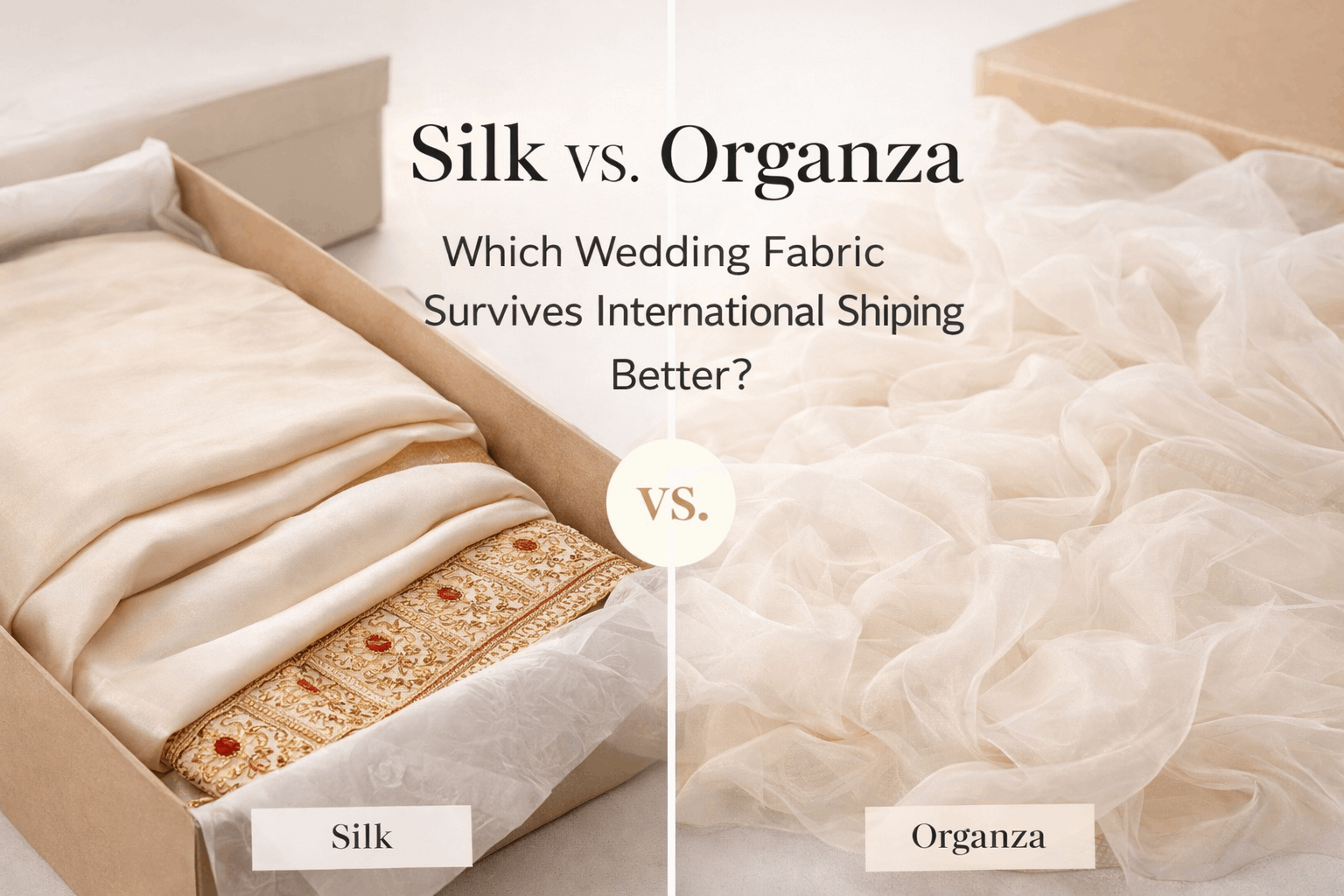
Silk vs. Organza: Which Wedding Fabric Survives International Shipping the Best?
Published on 26th January 2026 by Vismaya R K
Shipping
Introduction: Why Fabric Choice Matters When Shipping Wedding Wear Internationally
For NRI brides and families planning a wedding abroad, buying wedding outfits from India is often non-negotiable. Indian craftsmanship, fabrics, and detailing are hard to match anywhere else. But once the outfit is ready, a new concern quickly follows:
Will my wedding dress survive international shipping?
From long transit times and multiple handling points to humidity changes and compression during air cargo, shipping delicate wedding fabrics overseas requires careful planning. Two of the most popular bridal fabrics Silk and Organza behave very differently when shipped internationally.
Organza is lightweight and reduces shipping costs, but it demands specialized packing. Silk, on the other hand, is heavier and more expensive to ship, yet far more forgiving during transit. Understanding these differences can save brides from unnecessary stress, damage, or last-minute alterations.
Common Concerns Brides Have About International Shipping
Before comparing fabrics, it’s important to understand what typically worries international brides:
Will the fabric crease permanently?
Can embellishments snag or tear?
Will moisture damage the material?
Will customs inspection affect the garment?
How do I pack without ruining the structure of the dress?
These concerns are valid, especially when wedding outfits are irreplaceable and time-sensitive.
How Shipping Distance and Handling Affect Delicate Fabrics
International shipments pass through multiple stages: warehouse storage, airline cargo holds, customs inspections, and last-mile delivery. During this journey, garments may be folded, compressed, or exposed to varying temperatures and humidity levels.
Some fabrics handle this stress better than others, which brings us to silk and organza.
Understanding Silk as a Wedding Fabric
What Makes Silk a Premium Bridal Fabric
Silk has been a cornerstone of Indian wedding wear for centuries. Whether it’s Banarasi, Kanjeevaram, or pure mulberry silk, this fabric is known for its strength, natural sheen, and luxurious feel.
What many brides don’t realize is that silk is not just beautiful it’s also structurally resilient.
Weight and Durability of Silk During Shipping
Silk is comparatively heavier than most bridal fabrics. While this increases shipping costs, it also provides an advantage: silk holds its structure well under pressure.
It resists tearing, maintains weave integrity, and is less prone to surface damage during transit.
How Silk Handles Folding, Pressure, and Transit Stress
Creases in silk are usually reversible with professional steaming
The dense weave protects against minor abrasions
Embroidery and zari work sit more securely on silk bases
For long-distance international shipping, silk offers peace of mind.
Shipping Cost Impact of Silk Garments
The downside? Weight.
Silk lehengas and sarees increase volumetric and actual weight, which can raise shipping costs. However, many NRI families consider this a worthwhile trade-off for safety and durability.
Understanding Organza as a Wedding Fabric
Why Organza Is Popular for Modern Bridal Wear
Organza has become a favorite for contemporary bridal fashion. It’s sheer, elegant, and perfect for layered silhouettes, ruffles, and statement drapes.
It photographs beautifully and feels light to wear, but shipping tells a different story.
Lightweight Advantage: Lower International Shipping Costs
One clear advantage of organza is its weight. Being extremely lightweight, it significantly reduces shipping costs especially for volumetric pricing.
For budget-conscious brides, this can be appealing.
Why Organza Is More Vulnerable to Snags and Creases
Organza is delicate by nature. Its thin, transparent weave is susceptible to:
Permanent creasing
Snagging on embroidery or hooks
Crushing under pressure
Deformation if folded incorrectly
Without the right packing, organza dresses can arrive looking flat or damaged.
Special Packing Needs for Organza Dresses
Organza cannot be treated like regular clothing during shipping. It requires:
Layered tissue or fabric padding
Shape-supporting folds
Moisture barriers
Rigid outer boxing
This is where professional protective packaging becomes essential.
Silk vs. Organza: Shipping Survival Comparison
Durability: Which Fabric Handles Long Transit Better?
Silk clearly wins in terms of durability. It tolerates pressure, handling, and extended transit times better than organza.
Organza can survive shipping but only when packed correctly.
Weight vs. Safety: Cost vs. Protection Trade-Off
Silk: Higher shipping cost, lower damage risk
Organza: Lower shipping cost, higher risk without proper packing
The choice often comes down to budget versus risk tolerance.
Which Fabric Is Riskier Without Professional Packing?
Organza is far riskier if shipped with basic or standard packaging. Silk is more forgiving even with simple packing, though protective measures are still recommended.
How Protective Packaging Makes a Difference
Why Regular Packaging Isn’t Enough for Bridal Fabrics
Standard courier packaging focuses on transport efficiency not fabric preservation. Bridal garments need specialized care to prevent irreversible damage.
How Shoppre Protective Packaging Protects Silk and Organza
Shoppre Protective Packaging services are designed specifically for international shipments from India, making them ideal for wedding outfits.
Key benefits include:
Multi-layer wrapping to prevent creases
Moisture-resistant barriers
Reinforced boxes to prevent crushing
Careful folding techniques based on fabric type
Layered Wrapping, Moisture Protection, and Box Reinforcement
For organza, protective packaging is not optional—it’s essential. For silk, it adds an extra layer of insurance, especially for heavily embroidered outfits.
Which Fabric Is Better for International Shipping? Final Verdict
Choose Silk If You Want Durability and Lower Damage Risk
If safety and peace of mind are your top priorities, silk is the safer choice for international shipping especially for heirloom or heavily embellished pieces.
Choose Organza If You Use Professional Protective Packing
Organza works well for international brides only when paired with specialized packaging services. With proper care, it can arrive just as stunning as it left the boutique.
Tips for Shipping Wedding Dresses Internationally Without Damage
Pre-Shipping Checklist for Brides and Families
Confirm fabric type and weight
Remove detachable accessories
Photograph the outfit before shipping
Choose reinforced packaging
Allow buffer time before the wedding
When to Choose Protective Packaging Services
If your outfit includes organza layers, fine embroidery, or is time-sensitive, professional protective packaging is highly recommended especially for overseas weddings.
Conclusion: Fabric Choice + Smart Shipping = Stress-Free Wedding Prep
Choosing between silk and organza isn’t just a style decision, it’s a logistics decision.
For NRI brides and families shipping wedding outfits internationally, understanding how fabrics behave in transit can prevent costly mistakes.
Silk offers durability and reliability. Organza offers elegance and lightness but demands expert handling. When paired with Shoppre Protective Packaging services, both fabrics can travel safely across borders, letting you focus on what truly matters: celebrating your wedding without stress.